Sustainable Baby Clothes: What Actually Matters (Not Just the Label)
"Sustainable" gets slapped on a lot of things these days, tote bags, water bottles, and yes, baby clothes. Half the time it means something real. The other half it means someone added a leaf icon to the tag and called it a day. If you're a parent trying to shop a bit more thoughtfully for your baby or toddler, it's worth knowing the difference. Especially when most baby clothes are cut so true to size that they're outgrown before the tags have even settled in. That's not really a growth problem. It's a fit problem, and it's a fixable one.
So let's talk about what sustainable baby clothes actually looks like once you get past the marketing. We've written before about why less really is more when it comes to a toddler's drawers, so consider this the deeper dive.
The problem with "sustainable" as a buzzword
Here's the thing nobody tells you: a garment made from organic cotton that falls apart after eight washes and gets binned isn't sustainable. It just moved the environmental cost from the growing stage to the manufacturing stage, then landed the whole lot in a bin bag anyway. Sustainability isn't really about a single fabric or a single certification. It's about how long something stays in use and how many times it gets worn before it's done.
What actually makes a piece sustainable
A few things matter more than the marketing copy would have you believe.
Fabric quality is the obvious one. Heavier, well-woven cotton holds its shape and colour through the wash cycle marathon that is parenting life, rather than pilling, thinning or going see-through by wash twenty.
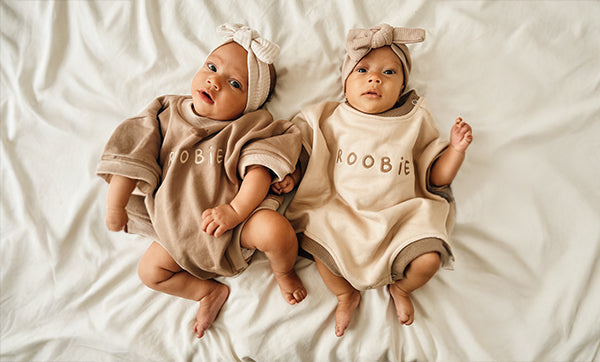
Fit matters just as much, and it's the bit most brands skip over. A piece cut with a bit of room in it (through the body, not just the length) gets more wear out of a single size before it's outgrown. That's the whole logic behind our oversized fits: your kid can wear a 12 to 18 month piece for closer to five or six months instead of eight weeks, which means fewer garments bought, fewer garments made, and less stuff cycling through the house.
And then there's durability under actual use, not lab conditions. Does the stitching hold up to a toddler doing whatever toddlers do to hemlines. Does it still look decent after the fortieth wash. Can it survive being worn by kid number one and then handed straight on to kid number two, or a mate's kid, or a cousin, without looking like it's been through a war. That's the real test.
Cost per wear beats cost per item
If you want a genuinely useful way to think about sustainable shopping, forget the price tag on its own and think about cost per wear instead. A piece that gets worn 100 times and then passed down to another kid for another 100 wears is doing far more work, and costing far less per wear, than a cheap piece that survives one season and heads to landfill.
This is really the whole argument for a smaller, better considered wardrobe over a big pile of cheap basics. Fewer pieces, worn more, worn by more than one kid, in colours that all go together so nothing's an orphan in the drawer. If you want the full logic on building one, our guide to a toddler capsule wardrobe walks through it properly.
Passed down, not thrown out
We're not fans of the term hand-me-down around here, mostly because it makes something genuinely great sound like a consolation prize. Passing clothes down, whether that's to a younger sibling, a cousin, a friend's baby, or the next family in line, is one of the simplest and most effective sustainable habits going. It only works, though, if the clothes are actually good enough to survive the trip, which is exactly what we dug into in building a baby wardrobe that's actually worth handing down.
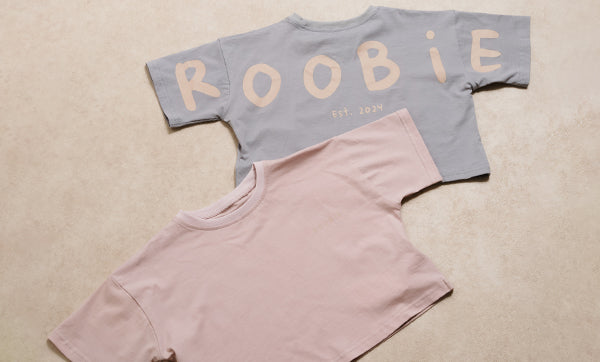
That's a big part of why we build ROOBiE pieces the way we do. Proper fabric weights, generous oversized cuts, and four core neutral colours, Macadamia Milk, Choccy Biccy, Bondi Breeze and Raspberry Whip, that were never trying to chase a trend in the first place, so they don't look dated two years and two kids later. Neutral doesn't have to mean boring either, and we've made the case for that in more detail here.
Building a genuinely sustainable capsule wardrobe
If you're starting from scratch or just trying to declutter the chaos of a baby's chest of drawers, a few basics go a long way.
Stick to a handful of colours that all mix and match, so every piece works with every other piece and nothing gets left behind because it clashes with everything else. Choose oversized or roomy fits over anything cut tight to size, so you get a longer run out of each piece as your baby grows. Prioritise fabric weight and stitching quality over how many items are in the pile. And keep the good stuff aside once your kid outgrows it, because someone down the track will be very glad you did.
None of this requires a total wardrobe overhaul or a guilt trip about past purchases. It's just a slightly different way of thinking about what goes in the drawer, one piece at a time. You can read more about how we think about it on our story page, or join the Capsule Club if you'd rather have the pieces picked for you.
If you're building out a small, considered wardrobe for your own bub, have a browse through our capsule collection at roobie.co.uk. Everything's designed in our four core neutrals to mix, match and eventually pass down to whoever comes next.