Gender Neutral Baby Clothes: Why "Neutral" Doesn't Mean Boring
Search "gender neutral baby clothes" and you'll mostly get two things: a wall of oatmeal-coloured basics that all look like they came from the same three factories, or someone's opinion piece about why the whole concept is either brilliant or ridiculous. Not much in between, and not much that actually explains what "neutral" is meant to achieve in the first place.
But neutral doesn't have to mean bland. It just means the colours were chosen to work for anyone, rather than to signal anything. So let's talk about it, and if you want the fuller case for going neutral in the first place, we've made it here: why choose neutral baby and toddler clothing.
What people usually mean by it
Most of the time, "gender neutral baby clothes" just means clothes that aren't obviously coded as "for a boy" or "for a girl" before the kid's even old enough to have an opinion on the matter. Practically, that solves a few real problems. It means clothes can be worn by whichever kid needs them next, sibling, cousin, mate's newborn, without anyone having to have a conversation about whether it's "appropriate." It also means you're not stuck buying an entirely new wardrobe if you find out halfway through pregnancy that your guess was wrong, or if you're just not fussed about broadcasting it either way.
But here's where a lot of "neutral" ranges fall down: they treat neutral as a synonym for flavourless. Grey. Oatmeal. A slightly sad off-white that photographs fine but looks tired within a month of actual wear.
Neutral doesn't have to mean beige, and beige doesn't have to mean boring
This is the bit we actually care about. Our four core colours weren't picked because they're the safest, least offensive options in the crayon box. They were picked because they hold their own.
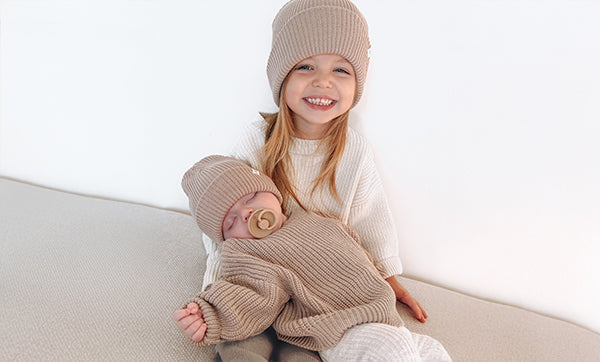
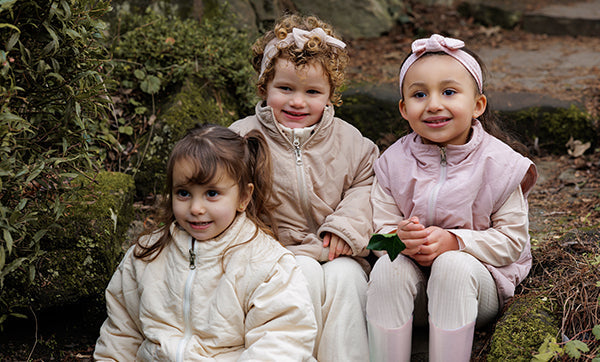
A pink that isn't shouting "girl", it's just a warm, dusty pink that would look just as at home on a jumper as a kids' picture book cover. A blue with a bit of purple worked through it, rather than the stereotypical flat "boy blue" that's really just there to signal something rather than actually look good. These aren't compromises on the way to a more colourful wardrobe, they're the actual destination.
The test we use is simple: would this piece still look considered if you put a boy and a girl and a kid who couldn't care less either way all in it? If yes, it's doing its job.
Why this is genuinely more practical, not just more thoughtful
Setting the identity conversation aside for a second, gender neutral colour choices are just useful. They mean everything in the wardrobe can be worn by whoever needs it, whenever they need it, without the colour dictating who "should" be wearing it. That matters more than people expect once you've got more than one kid, or you're passing pieces on to someone else's, because nobody wants to explain why the jumper's "not really for him."
It's also why the pieces mix and match properly. When your colours are chosen to complement each other rather than to signal a category, you end up with a wardrobe where everything genuinely goes together, not just the things that happen to share a gender-coded shelf at the shop.
Building a gender neutral outfit that doesn't look like a placeholder
A few things make the difference between "neutral" as a genuine aesthetic choice and "neutral" as the default option when nobody could decide:
Texture and cut do a lot of the work that colour alone can't. An oversized knit or a well-cut wide-leg pant reads as considered regardless of colour, in a way a plain flat tee in the same shade doesn't.
Layering two neutrals with slightly different undertones (say, a warm oat with a cooler sage) tends to look more deliberate than matching everything exactly. It's the same trick stylists use with adult neutral wardrobes, it just works even better on kids because nobody's precious about clashing a fraction.
And honestly, real quality helps more here than anywhere else. A washed-out, bobbled neutral just looks sad. A well-made one gets better with wear, which is sort of the whole point of a piece that's going to be worn hard, washed constantly, and quite possibly passed down to whoever's next in line.
Worth a look
If you want to see what a genuinely considered neutral palette looks like rather than the default "avoid pink and blue" version, have a browse at roobie.co.uk. No pressure, just a different take on what "neutral" can actually mean for a wardrobe that's built to be worn properly.